When: Tuesday October 27th 2026
13:00-13:50: talk by Aishwarya Agrawal, followed by questions
14:00-16:00: hands-on tutorial with Elizabeth DuPre
Overview
This session is about alignment: finding a common space in which different representations can be compared and combined. It covers two complementary problems.
Aligning modalities. Multimodal models learn to align representations of images and language, so that a model can describe what it sees or answer questions about an image. A 45-minute talk, followed by questions, will present how vision-language models achieve this alignment, and how to evaluate whether they truly ground language in vision.
Aligning brains. No two brains are organized exactly alike, and anatomical registration alone does not bring functional responses into correspondence. A two-hour hands-on tutorial will introduce functional alignment with fmralign, a Python library built on nilearn and scikit-learn that aligns brain activity across human participants, using methods such as Procrustes, shared response modeling and optimal transport.
Instructors
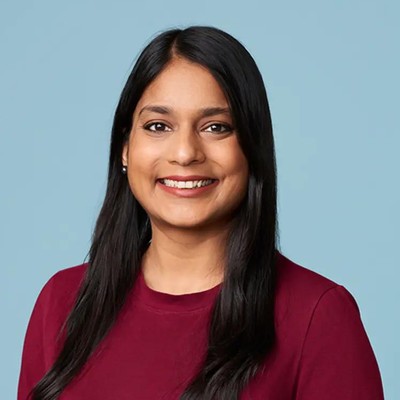
Aishwarya Agrawal
Université de Montréal and Mila
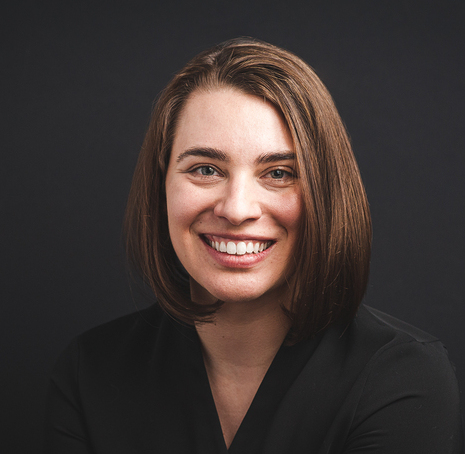
Elizabeth DuPre
Université de Montréal
Aishwarya Agrawal is an assistant professor in the Department of Computer Science and Operations Research (DIRO) at Université de Montréal, a Canada CIFAR AI Chair, and a core academic member of Mila. Her research lies at the intersection of computer vision, deep learning and natural language processing, with a focus on AI systems that can “see” and “talk”.
Elizabeth DuPre is a postdoctoral fellow in the Department of Psychology at Université de Montréal. As a psychologist and computational neuroscientist, her work focuses on modeling individual brain activity across a range of cognitive states, and assessing how well these individualized models generalize. She is an active developer of open source Python tools for neuroimaging, including nilearn and fmralign, with a focus on the reproducibility of analysis workflows. She previously gave a keynote on aligning representations in brains and machines at MAIN educational 2022.
Objectives
Understand how vision-language models align visual and linguistic representations.
Learn how to evaluate multimodal models, and the pitfalls of current benchmarks.
Learn the basics of functional alignment, and why anatomical alignment alone is not enough to compare brain activity across participants.
Align fMRI data across participants with fmralign, comparing methods such as Procrustes and optimal transport.
Build a group template, and evaluate alignment quality using inter-subject decoding.
Materials
Tutorial notebooks coming soon.